Municipal water & wastewater
Arc Flash & Power System Studies for Water and Wastewater Plants
Short circuit, coordination, arc flash, load flow and motor starting studies for treatment plants, reclamation facilities, wells, pump stations and elevated tanks. PE-sealed, delivered direct to utilities or as a subconsultant to your design engineer.
Water and wastewater is our largest sector
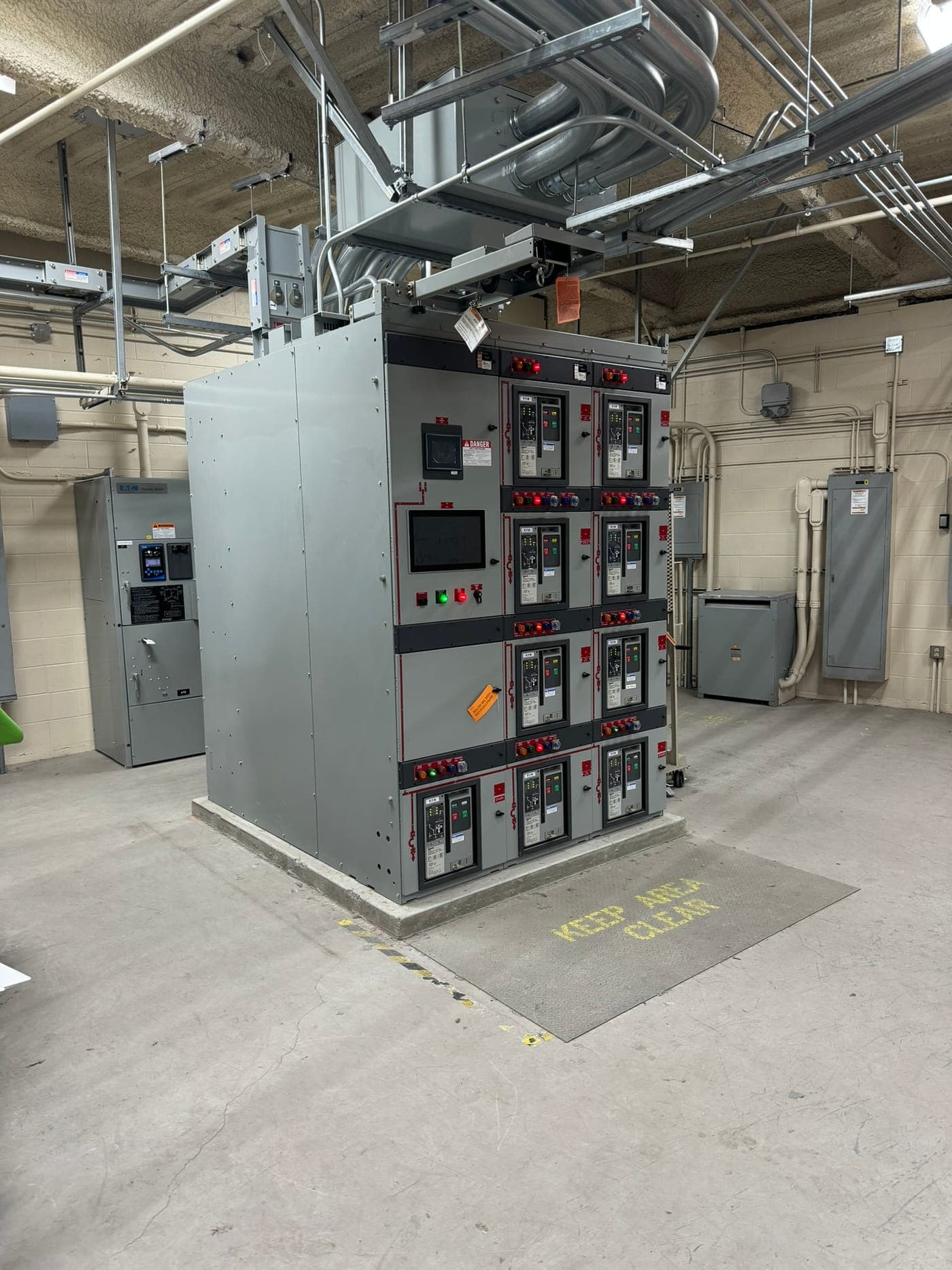
16 of our projects have been for water and wastewater systems: treatment and reclamation plants, wells and chemical-feed buildings, pump stations and elevated tanks. Most were delivered as part of a plant expansion or equipment upgrade, alongside the design engineer of record.
These systems have a profile that a generic arc flash study handles badly. They have dozens of VFD-fed pumps, double-ended services, standby generators and remote sites, and they run around the clock, so the gear is rarely de-energized. The study has to model the real operating cases, not just the normal one.
See the depth of a real deliverable in our sample arc flash study report, which you can download free with no form.
What we model differently at treatment plants
VFD-heavy MCCs and selectivity
Pump MCCs with a fused disconnect and a VFD in series on every motor rarely achieve full selectivity. We say so plainly in the report, then make the MCC main selective with the pump feeders so a single pump fault doesn't drop the whole bus.
Double-ended services and tie breakers
Plants with two utility transformers and a tie are modeled for each real operating case: normal, loss of transformer A, and loss of transformer B with the tie closed. The worst case goes on the label, and the report names the scenario that drives it.
Generator and standby operation
On generator, arcing current can fall below breaker short-time and instantaneous pickups. Clearing slows, and incident energy at the MCCs climbs. We model the generator source and recommend dual settings groups or a maintenance switch where it matters.
Motor starting and voltage drop
Expansions add 100–200+ HP pumps to existing services. We check sequential starting, voltage dip and flicker per IEEE 141 and feeder voltage drop in contingency, so the new pumps start without tripping the old ones.
Remote sites, same standard
Wells, lift stations and elevated tanks get the same field verification as the main plant. Lengths for outdoor runs are measured from aerial mapping and rounded short, which gives the worst-case fault current.
Corrosive, washdown environments
Labels are specified for the environment so they're still readable at the next five-year review. Equipment condition we can see during data collection is noted in an out-of-scope observations section.
Utilities & plant operators
Need a first study, or your current one is past its five-year review? You get a fixed fee you can put on a requisition, field work scheduled around operations, and labels installed on site.
Design engineers & contractors
Is a studies section holding up your submittal? We work as your studies subconsultant, sealed in the project state and delivered on your schedule.
Water & wastewater study FAQ
Yes. NFPA 70E 130.5 requires an arc flash risk assessment for equipment that operators and electricians may examine, adjust, service or maintain while energized. OSHA cites the general duty to assess electrical hazards. Treatment plants, pump stations and wells all qualify, and the assessment must be reviewed at least every five years or after a system change.
Yes, and most of our water and wastewater studies are delivered that way. We write to the project's power system studies specification (Section 26 05 73), deliver short circuit, coordination and arc flash results in time for equipment submittal review, and issue the settings sheet before startup.
If the existing model is available and accurate, an expansion is usually an update: add the new equipment, re-run the scenarios, and re-label what changed. If the last study used IEEE 1584-2002 or no model exists, a full study is more reliable and often not much more expensive.
Almost all field data is collected energized, in appropriate PPE. The few enclosures that must be opened de-energized are identified in the proposal so operations can plan around them.
Related services: Arc flash study Coordination study Load flow & voltage drop
Scope your plant's study
A 10-minute call with a licensed PE — we'll tell you what your study should cover and what it should cost. No obligation.